Our Science

Randomized, controlled clinical trial

Real change
you can see
in the brain.

Real change you can see in the brain.

COAT is a non-invasive, at-home therapy for early Alzheimer's disease and amnestic mild cognitive impairment (aMCI). Here's a plain-language look at what our clinical trial measured, and what it found.

How COAT™ Technology Works

Explore COAT technology through our visual workflow and technology overview.
+ 0
PACC cognitive score, vs. control (p = 0.02)
0 %
More gray matter in memory-critical brain regions
0 %
Of participants stayed on treatment at home
0
Serious adverse events — no ARIA, no infusions
What we studied

A randomized trial, in the people COAT is built for.

We tested COAT against sham treatment plus standard of care, in adults living with early-stage Alzheimer's disease or aMCI, not a healthy volunteer population.

70

Participants enrolled, early Alzheimer's & aMCI

12 wks

Treatment period, used independently at home

RCT

Randomized, controlled — COAT vs. sham + standard of care

What we set out to measure

Primary Endpoints

1

PACC Score Change

Cognitive composite — memory, executive function, and global cognition — measured baseline to Month 6.

2

Gray Matter Volume

Hippocampus and entorhinal cortex volume, measured by 3-Tesla structural MRI.

Secondary & Exploratory Endpoints

  • ADAS-Cog 13
  • Olfactory Function
  • CDR-Sum of Boxes
  • Neuropsychological Battery
  • Quality of Life & Depression

ADAS-Cog 13

Olfactory Function

CDR-Sum of Boxes

Neuropsychological Battery

Quality of Life & Depression

Safety

Safety & tolerability — adverse events, vital signs, and discontinuation rates — monitored at every visit.

Fig. 1 & 2 — clinical decline

Less decline, measured the way clinicians measure it.

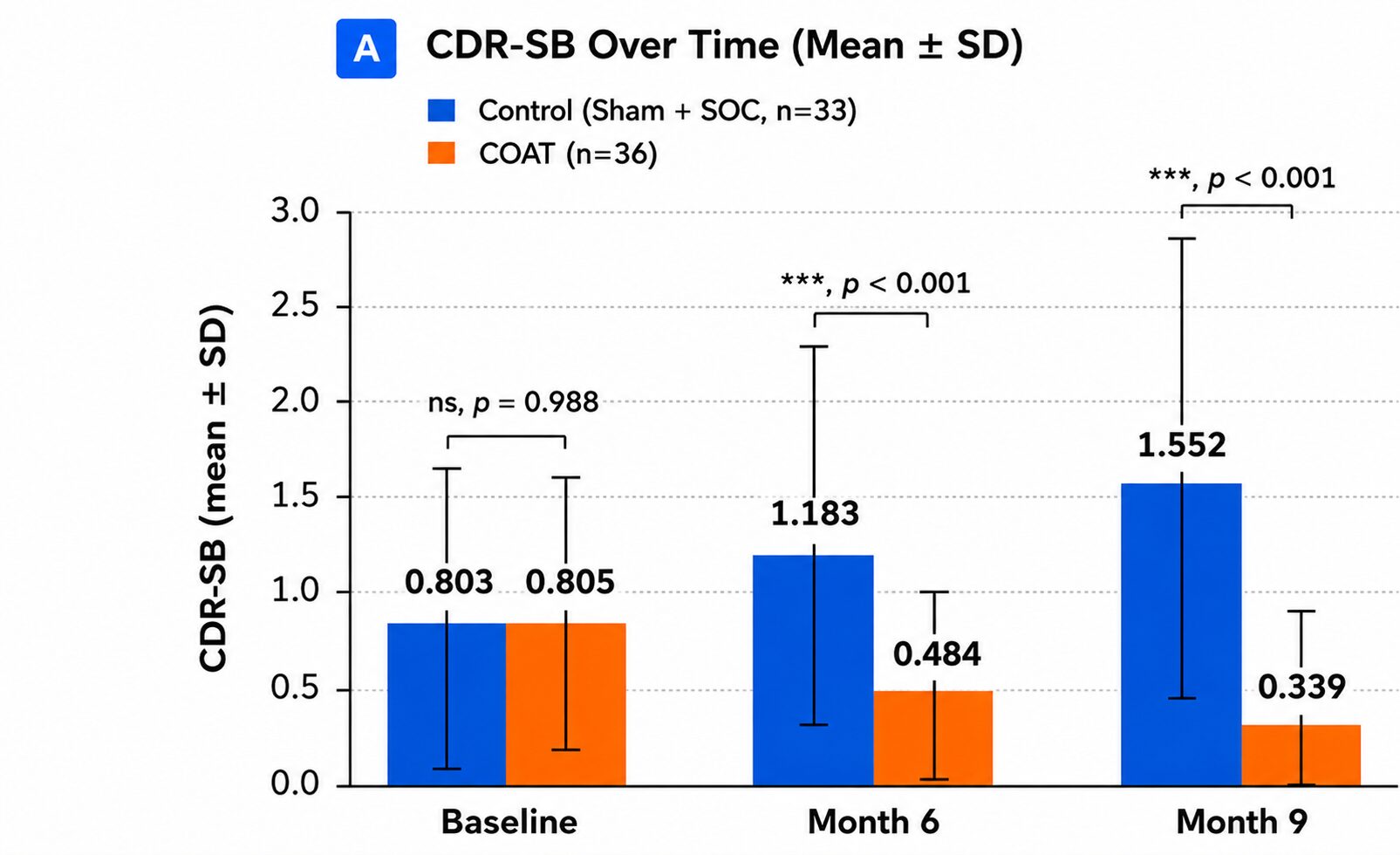
CDR-SB is the same rating scale clinicians use in memory clinics to track Alzheimer's progression. Lower is better — it means less day-to-day decline.

We followed both groups for 9 months using the Clinical Dementia Rating–Sum of Boxes (CDR-SB), a standard measure of memory and daily functioning. Both groups started in the same place. From there, the two groups moved in opposite directions.

FIG. 1 — CDR-SB over time (mean ± SD)
Control arm kept declining; COAT arm did not.
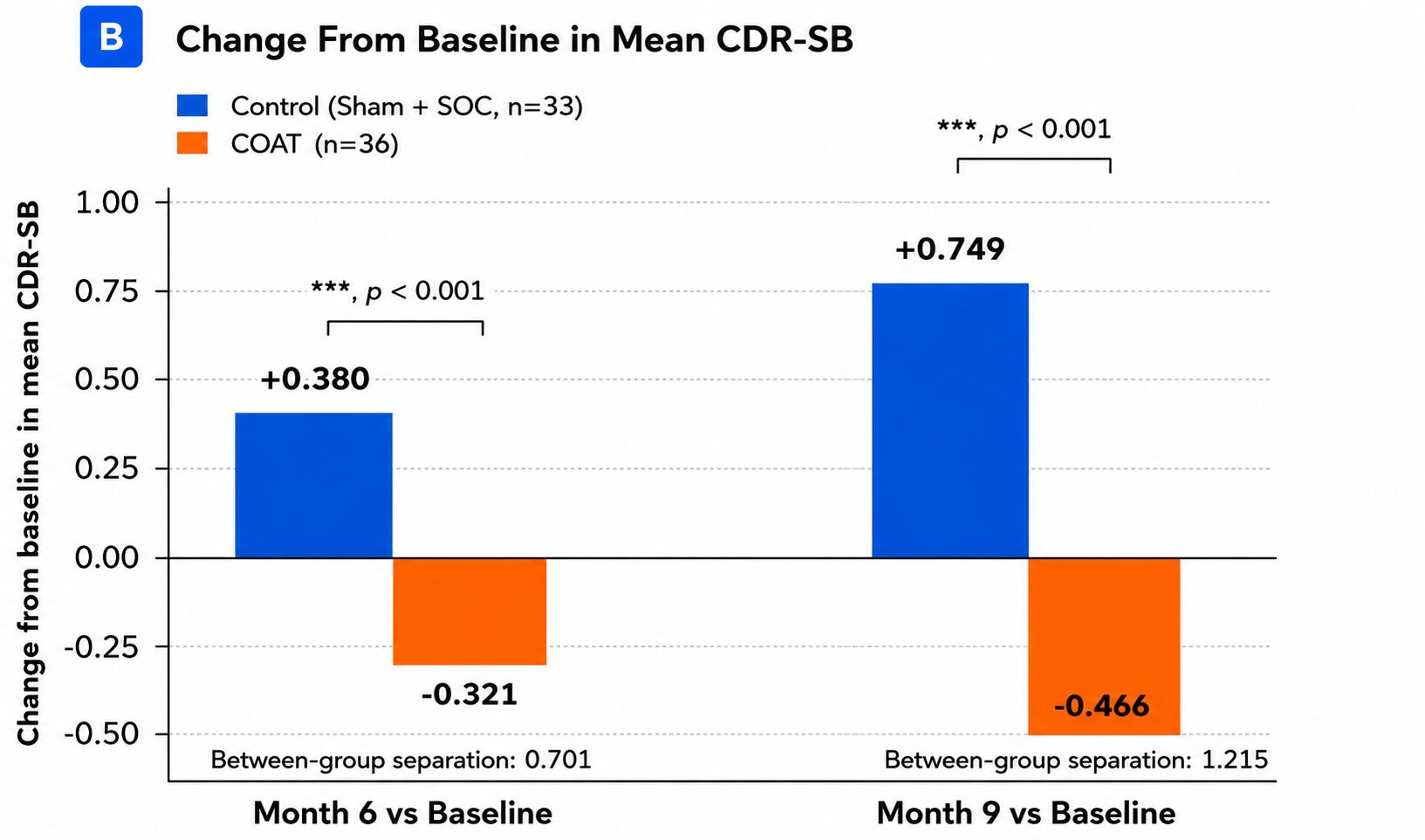
Month 6 vs. baseline

−0.321 COAT

vs. +0.380 for control p < 0.001

Month 9 vs. baseline

−0.466 COAT

vs. +0.794 for control p < 0.001

FIG. 2 — Change from baseline in mean CDR-SB
Negative = improvement. Positive = decline.

In plain terms: by month 9, people using COAT were, on average, holding steady or improving slightly on this scale — while the control group’s scores nearly doubled, reflecting the clinical decline typically seen in untreated early Alzheimer’s. (This CDR-SB analysis is pending peer-reviewed publication.)
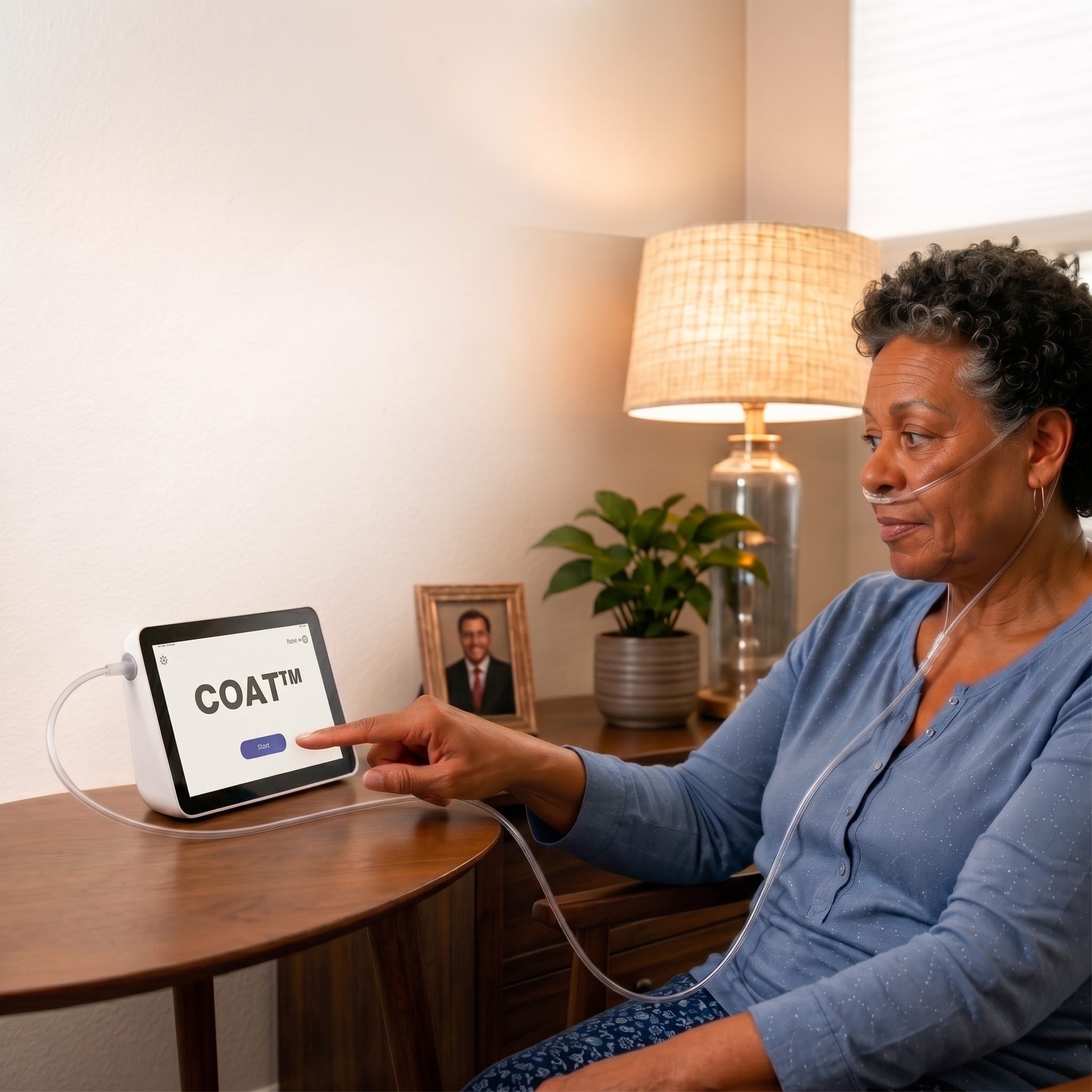
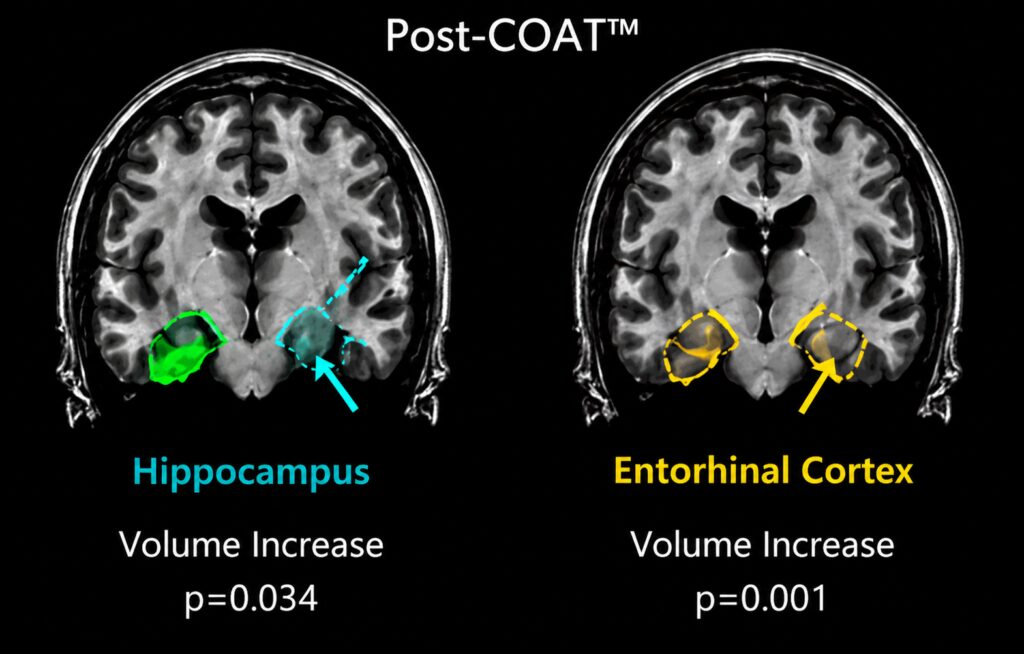
Fig. 3 — structural MRI

The brain regions that store memory, growing back.

Post-COAT MRI, medial temporal lobe regions of interest

The hippocampus and entorhinal cortex are among the first regions damaged in Alzheimer’s. We used MRI to see whether COAT changed them.

On follow-up MRI, participants who used COAT showed measurable volume increases in exactly the regions Alzheimer’s targets first:

Hippocampus

Volume increase, p = 0.034 unit

Entorhinal cortex

Volume increase, p = 0.001 unit

This is the first time structural regrowth in these regions has been paired with a clinically meaningful cognitive improvement, using a non-invasive, at-home therapy rather than an infusion or implant.

FIG. 4 — Cognitive recovery, PACC score
Control: pre → post, p < 0.4 · COAT: pre → post, p < 0.02
Safety & everyday use

Designed to be used at home safely, and consistently.

A treatment only helps if people can actually stick with it. Here's how COAT performed on both counts.

92% Adherence

Kept up at-home use through the full 12 weeks

0 Serious adverse events

None reported in the treatment group

No ARIA

Brain swelling/bleeding.
A known risk with some infusion therapies

0

Hospital visits required
No infusions, no clinic visits for dosing